Why Do Adults Buy Toys for Themselves? Play, Memory and the Symbolic Meaning of Objects
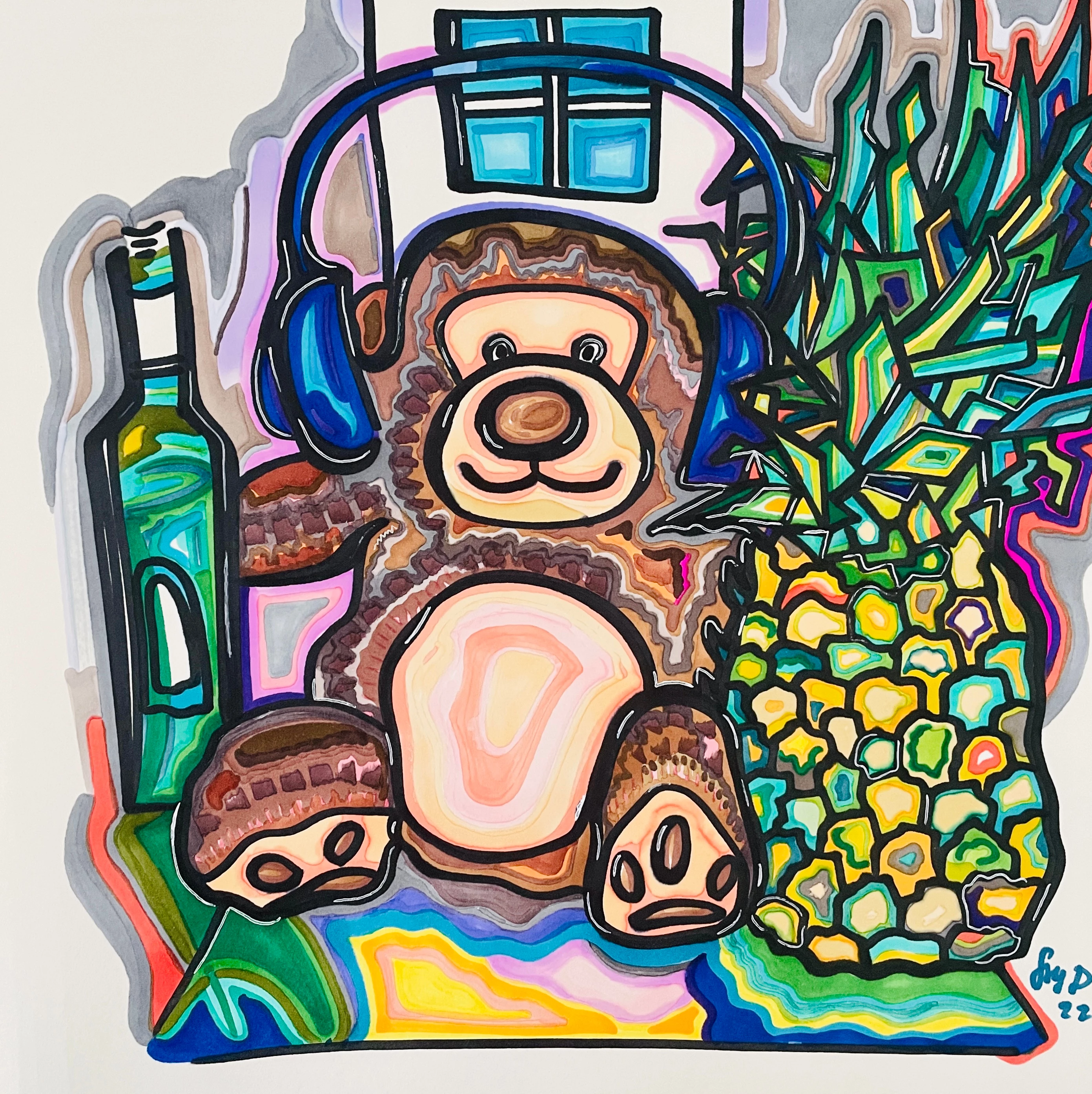
You’re sorting through your belongings before a move when you find an old teddy bear. Its fur has worn thin, and one ear has been sewn back on slightly crooked. You haven’t played with it in years. Yet when it’s time to decide what to take to your new home, the bear ends up in your suitcase.
Here’s another story. You buy yourself the doll you dreamed of having as a child. You bring it home, open the box and find that the most moving part of the purchase is finally being able to say to yourself, “I can give myself this.”
An old bear and a new doll can both mean something that their appearance or price can hardly explain. What does a toy represent to us? What can it help us feel, remember or imagine? These questions connect psychoanalysis, consumer research and today’s market for toys aimed at adults.
Freud. How Play Gives Shape to Experience
In Beyond the Pleasure Principle, Sigmund Freud (Freud, 1920) describes a game his young grandson played. The child tossed a spool attached to a string so that it disappeared from sight, then pulled the string to bring it back. As it disappeared and reappeared, he made sounds that Freud rendered as the German words fort and da, meaning “gone” and “there it is.”
Freud suggested that the game was connected to the mother’s departures. In everyday life, the child had no say over when she left or came back. In play, he could act out the disappearance and return himself and repeat them at his own pace. Freud was also struck by how often the child repeated the first, apparently unpleasant, part of the game. What draws us back to an experience that once caused us distress? The spool gave Freud a way into that question.
In an earlier essay, Creative Writers and Day-Dreaming, Freud (1908) draws a parallel between children’s play and literary creation. A child rearranges the familiar world according to the rules of imagination, while a writer creates a world they can become deeply invested in. The parallel comes to life when an adult builds an imaginary city out of LEGO or makes up a story for a doll. Imagination has something tangible to work with, something that can be moved, rearranged and given new meanings.
Melanie Klein. What Can Toys Help Us Express?
Melanie Klein (Klein, 1955) used simple toys in her work with children, including figures of people and animals, toy cars and blocks. She saw the sequence of a child’s actions as a way to understand their unconscious fantasies, anxieties and relationships. She paid attention to what happened between the figures, how the child felt about it and how the story changed over the course of the session.
Imagine a child locking a figure inside a little house, then spending a long time trying to open the door. In one story, the house might protect whoever is inside. In another, it might hold them captive. The same object can even change meaning as the game unfolds. That is why it matters to look at the whole scene and listen to the person playing it out.
In object relations theory, the word “object” has a specific meaning. It can refer to a significant person, such as a parent, or to the mental representation of that person that we carry with us. A toy can then become a symbolic object through which we express something about that relationship. Building on Klein’s ideas, Hanna Segal (Segal, 1957) stressed that a symbol can represent a significant object while remaining distinct from what it represents.
An old doll might, for instance, remind an adult of the grandmother who used to sew clothes for it. The doll might bring back the way her grandmother chose the fabric, the time they spent sitting side by side and the care she put into what she was making. The doll’s symbolic meaning grew out of their relationship. The very same doll might evoke entirely different feelings in someone else.
Winnicott. Why Does This Particular Teddy Bear Matter?
Donald Winnicott (Winnicott, 1953) used the term transitional object for an object a young child singles out and becomes attached to. It may be the corner of a blanket, a piece of cloth or a soft toy. The child may reach for it at bedtime or take it along when they have to be apart from someone. The object has its own texture, smell and weight, and the child gives it a meaning of their own. Winnicott was interested in this intermediate area of experience, where an external object meets a person’s inner experience.
In Playing and Reality, Winnicott (1971) develops this idea and connects that area of experience with play, creativity and cultural life. As adults, we retain the ability to find personal meaning in things that exist in the outside world. Someone might keep an old bear because it reminds them of home, or buy a new one because it feels good to hold.
How Can a Toy Help Us Feel Calmer and Reconnect With Our Inner Child?
When you feel anxious, you can pick up a soft toy and notice its weight and texture. The familiar sensation gives your attention something concrete to settle on. This can help ease some of the tension and make it easier to notice what’s happening in the moment. In a study by Tribot and colleagues (Tribot et al., 2023), how comforting participants found a teddy bear was related both to its sensory qualities and to their emotional bond with it.
What do we mean by the “inner child”? In transactional analysis, Eric Berne (Berne, 1961) described three ego states, Parent, Adult and Child. The Child ego state refers to ways of feeling, thinking and acting that are linked to our childhood experiences. When we talk about the inner child, we might be referring to an old fear or feeling of shame, or to the curiosity, spontaneity and enjoyment of play we knew as children.
Imagine being invited during a consultation to choose a figure for the part of you that feels scared right now. You set a small animal figure apart from the others, then notice that you want to move another figure closer to it. That small movement may lead to something you’ve had trouble saying out loud. “When I’m scared, I just want someone to stay with me.” Sometimes the figure makes it easier to see what you’re feeling before you find the words for it.
Why Is It Easier to Say “I Collect” Than “I Play”?
Imagine you’ve spent an evening photographing a doll in a miniature set you built yourself. If someone asks what you did, you could say “I played with dolls,” “I photographed miniatures,” or “I worked on my collection.” Each answer describes part of what happened. Words like “photography” and “collection” give the listener familiar points of reference. They can ask about the technique, the story behind the scene or the history of a particular edition. The word “play” brings something else to the surface: the possibility of doing something simply for enjoyment.
Collecting also has a social side. In her study of adult LEGO fans, Vlada Botorić (Botorić, 2026) describes how people display their creations, take part in their communities, share the feelings their hobby brings up and develop a sense of belonging.
Who Are Kidults, and What Does the Toy Industry Sell Them?
The English word kidult blends kid and adult. One of its earliest known uses dates to 1948, when it appeared in a US newspaper advertisement for a radio programme featuring fairy tales. The advertisement appealed to adult listeners as well. As film historian Noel Brown (Brown, 2017) notes, Variety used the word in 1954 for television shows that aired in time slots usually reserved for children’s programming and attracted adult viewers too. Even in these early uses, the term suggested that entertainment could appeal to people of different ages.
Today, kidults are a category in toy market research, although the definition varies by report. Circana, for example, includes toy recipients aged 12 and over. In the 12 months ending September 2025, this group accounted for 28% of toy sales by value in Italy and 35% in Germany. The figures therefore include teenagers. What counts is the age of the person the toy is for. When an adult buys a building set for a six-year-old, the purchase falls into the children’s segment.
LEGO offers time spent building and something to display at home. In the Adults Welcome section of its Swiss website, LEGO presents its 18+ sets as intricate models, collectibles and home décor. A bouquet from the Botanicals range is a good example. Before buying it, you can picture a quiet evening spent putting it together and the finished bouquet on your table. The brand shows how play can fit into everyday adult life.
Mattel turns a doll release into an event for collectors. With Barbie Signature, the company draws on fashion history and recognisable looks. Barbie Club 59 members get early access to some sales and can purchase certain exclusive editions. You might want a doll because of its outfit, because it resembles one you dreamed of having, or because it completes a series. The way it is sold can add another feeling, the fear of missing out. “I like this doll” and “I have to decide right now” can occur to you at the same time.
The market offers ready-made ways to use a toy. You can build it and put it on display, track down a rare edition or clip it onto a bag. Personal meaning comes from what you do with the object afterwards. You might buy a bouquet to decorate your home and discover that the evenings spent building it gave you the most pleasure. You might find the doll you dreamed of as a child and realise that what mattered most was being able to give it to yourself. If someone broke your doll, or your mother gave it to the girl next door while you were away, that gesture might feel like putting something right. It can be a way to regain a sense of control and offer your inner child some support.
How I Work in My Practice
In my practice, I keep a range of objects, toys and coloured stones. I use them to help people reconnect with their inner child or choose a symbolic object to express what they are feeling.
When someone chooses a figure to represent a person close to them or a feeling of their own, their experience takes on a visible form. They may recognise something about what they are feeling through the object. I often notice a shift in their voice or the way they speak. A moment earlier, they may have been telling me about a significant event or someone important to them, such as a former partner. When they address the figure, their tone can change.
You can place the toy that represents a former partner or your anxiety in front of you, move it further away or bring it closer, and notice what changes in your body and what words come to mind. Research on visual mental imagery shows that when we picture a person or a scene, the brain recruits some of the same regions it uses for visual perception (Pearson, 2019).
A related principle is used in the Gestalt empty-chair technique, which I also use regularly in my work. The person imagines that someone significant is sitting opposite them and speaks to them directly. After saying, “I never told him how hurt I was,” they can turn towards the chair and say, “It hurt when you left.” The focus is on what happens here and now. Where does the sentence trail off? How does the voice change? Which feeling comes into focus? The chair or figure gives the imagination something to work with and can help put words to what has remained unsaid (Paivio & Greenberg, 1995).
Conclusion
A toy can give shape to something that is difficult to put into words at first. In Freud’s account, the spool lets a child act out a disappearance and a return. In Klein’s work, the figures show how a child brings relationships and feelings into play. For Winnicott, a familiar object acquires personal meaning where inner experience meets the outside world.
Give yourself permission to play, buy yourself toys and take care of your inner child. If something is troubling you and you’d like to talk about it, I welcome you to my psychology practice in Geneva, where we can explore it together.